Rising from the Gulf of Tonkin in northeastern Vietnam, Ha Long Bay's 1,969 limestone karst islands have witnessed the full sweep of human civilisation — from prehistoric fishermen to imperial fleets. Behind every mist-draped pinnacle lies a story stretching back further than recorded time itself.
Ha Long Bay's story begins approximately 500 million years ago, when the region sat beneath a shallow tropical sea. Layers of calcium carbonate accumulated over aeons, gradually forming the thick limestone beds that underpin today's iconic karsts. Tectonic upheaval, sea-level fluctuations during successive ice ages, and millions of years of rainwater erosion sculpted these formations into their present cathedral-like shapes. The process — known as karstification — dissolved the rock from within, carving caves, grottos, and hollow peaks that give the bay its otherworldly silhouette. By the time humans first arrived, the landscape was already one of the most dramatically sculpted coastal environments on Earth.
Archaeological excavations have uncovered evidence of human habitation in Ha Long Bay dating back roughly 18,000 years, placing the earliest settlers here during the Upper Palaeolithic period. The Soi Nhụ culture, identified from sites including Đồng Mang and Xích Thổ, represents one of Southeast Asia's most ancient coastal communities. Later, around 4,000 to 7,000 years ago, the Cái Bèo culture established more permanent settlements, relying on the bay's extraordinary marine abundance for sustenance. Shell middens, stone tools, and primitive fishing implements recovered from cave floors paint a vivid picture of resourceful communities who mastered life among the labyrinthine islands long before any written record existed.
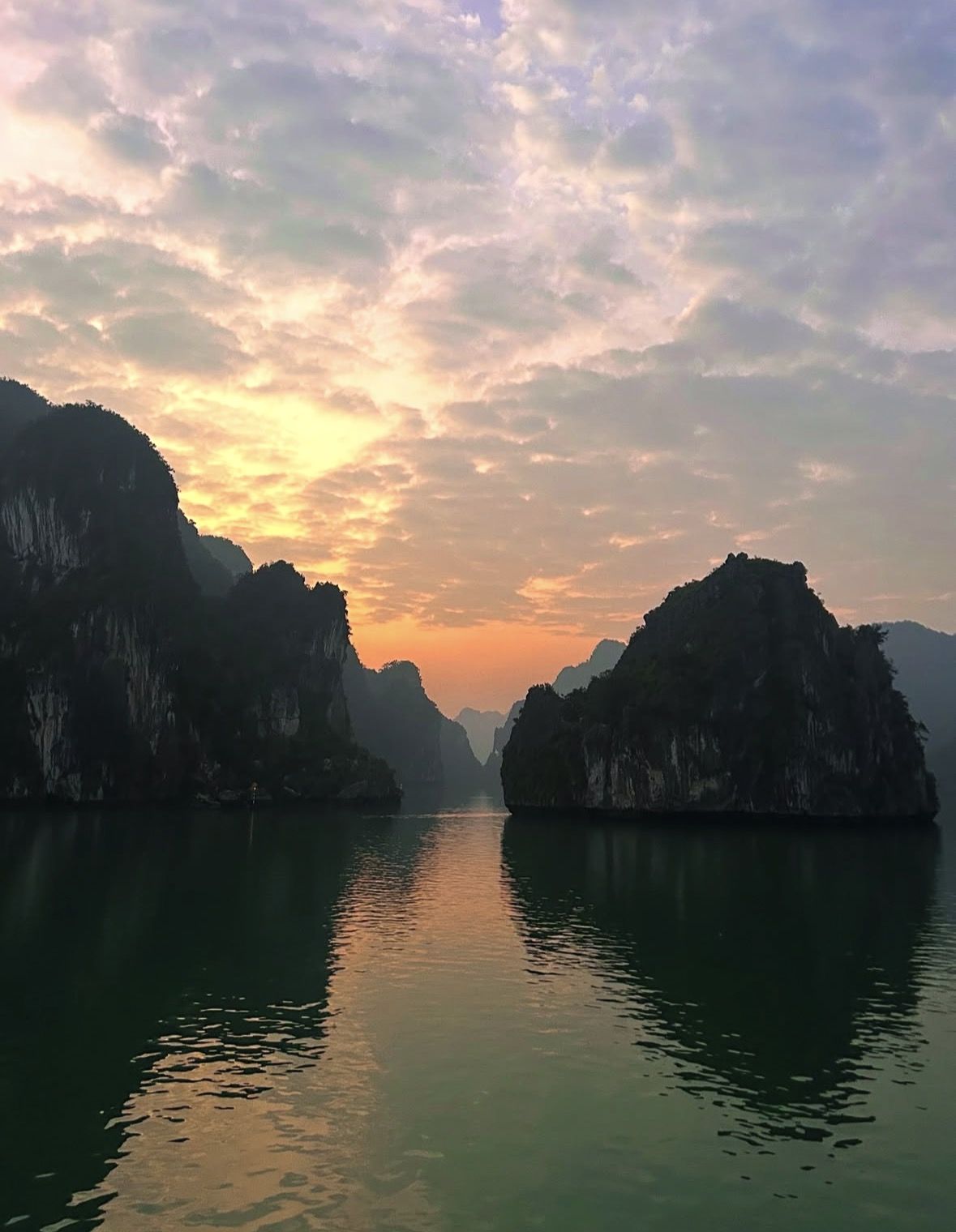
The bay's very name encodes its founding mythology. 'Ha Long' translates as 'Descending Dragon' in Vietnamese, and the legend behind it is both vivid and ancient. According to tradition, the Jade Emperor dispatched a family of celestial dragons to defend the Vietnamese people against invading forces from the north. The dragons descended spitting jewels and jade from their mouths, which instantly transformed into the thousands of islands and islets that blocked enemy ships. Having completed their divine mission, the dragons chose to remain, their coiled bodies becoming the permanent stone formations visible today. This creation myth remains deeply embedded in Vietnamese cultural identity and continues to shape how locals and visitors alike understand the bay.
Ha Long Bay held profound strategic importance throughout Vietnam's imperial centuries. The legendary general Trần Hưng Đạo famously used the bay's treacherous shallow channels and jagged karsts to devastating effect during the Battle of Bạch Đằng River in 1288, luring the Mongol fleet of Kublai Khan into the estuary at low tide. Iron-tipped stakes driven into the riverbed destroyed hundreds of Mongol vessels as the tide receded, delivering one of history's most decisive naval defeats. This victory ended the Mongol Empire's ambitions in Southeast Asia entirely. The bay's geography was not merely scenery — it was a weapon, wielded with genius by commanders who knew every hidden channel and tidal rhythm.
Beyond warfare, the bay nurtured a remarkable floating civilisation. For centuries, fishing communities built their entire lives on the water, constructing stilt houses and floating villages among the islands. Communities such as Cửa Vạn, Ba Hang, Vông Viêng, and Cống Đầm developed distinct dialects, customs, and fishing traditions passed down through generations. Children were born, educated, and married on the water, rarely setting foot on solid ground. These communities developed intimate ecological knowledge of the bay's currents, fish migration patterns, and seasonal weather. Though the Vietnamese government has since relocated many floating village residents to mainland housing in Hạ Long City, their cultural legacy remains a central part of the bay's living heritage.
The twentieth century brought dramatic transformation to Ha Long Bay's profile on the world stage. Following the reunification of Vietnam in 1975, the bay gradually opened to international visitors as the country rebuilt and reformed under the Đổi Mới economic liberalisation policy introduced in 1986. Tourism infrastructure developed rapidly through the 1990s, and in 1994 UNESCO inscribed Ha Long Bay as a World Heritage Site, recognising its outstanding universal value for scenic beauty. A second inscription in 2000 expanded recognition to include the bay's extraordinary biodiversity and geological significance, cementing its status as one of Asia's most important natural treasures and triggering an exponential surge in visitor arrivals.
UNESCO's recognition was not merely honorary — it imposed meaningful conservation obligations on Vietnamese authorities. The bay was simultaneously inscribed on Vietnam's list of national special relics, and a dedicated management board was established to oversee environmental protection, regulate tourism activity, and combat illegal fishing practices including the use of dynamite and poison that had severely depleted marine stocks. Strict zoning divided the bay into core conservation areas, buffer zones, and tourism corridors. Overnight cruise vessels, which had proliferated rapidly, became subject to licensing, waste-management requirements, and capacity limits designed to prevent the kind of mass-tourism degradation that had compromised other World Heritage Sites globally.
Ha Long Bay's international fame continued to accelerate through the 2000s and 2010s, amplified by appearances in major films including the James Bond adventure 'Tomorrow Never Dies' (1997) and the Hollywood blockbuster 'Kong: Skull Island' (2017). By 2019, the bay was receiving nearly five million visitors annually, making it the most visited destination in Vietnam and one of Southeast Asia's top ten tourism earners. In 2011, Ha Long Bay was named one of the New Seven Wonders of Nature following a global public vote organised by the New7Wonders Foundation, with over 100 million votes cast worldwide — a recognition that brought unprecedented global media attention and further cemented the bay's iconic status.
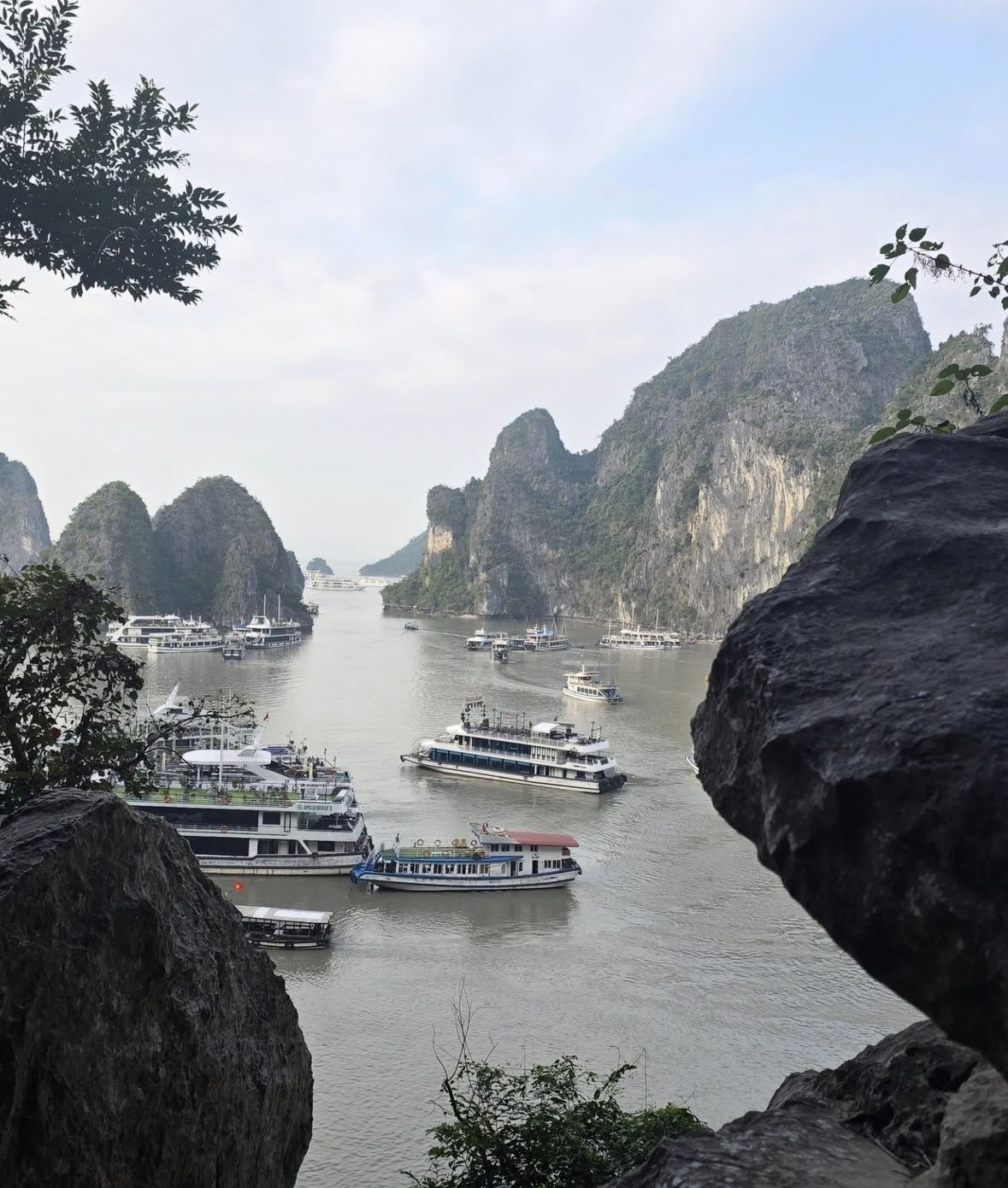
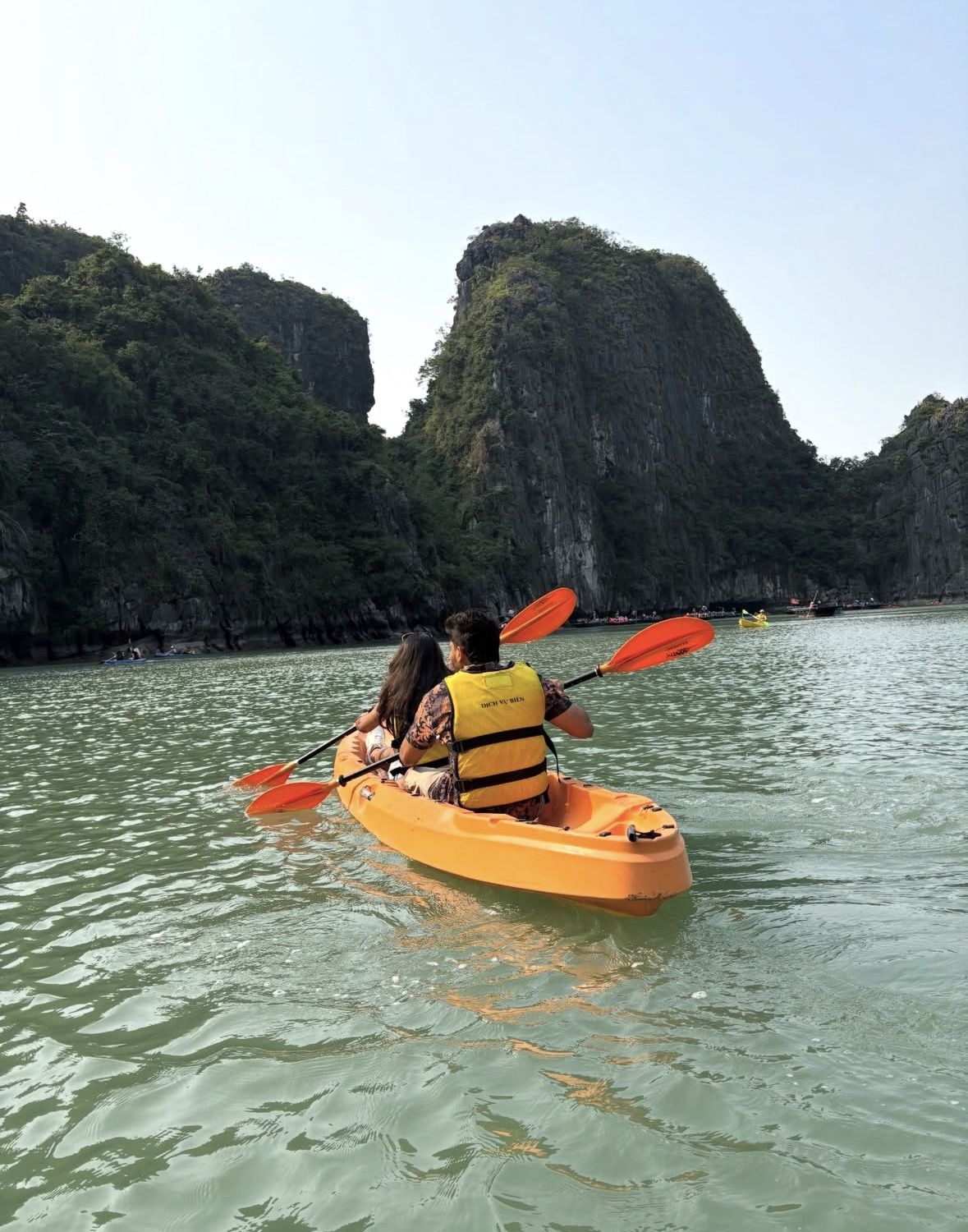
Today, Ha Long Bay exists as a carefully managed balance between preservation and experience. Visitors arrive by road from Hanoi — approximately 160 kilometres to the west — before boarding traditional-style wooden junk boats that navigate the bay's inner waterways. The experience ranges from budget day trips to multi-day luxury cruises aboard vessels equipped with fine dining, spa facilities, and kayaking excursions. Key highlights include Hang Sửng Sốt (Surprise Cave), a vast illuminated grotto discovered by French explorers in 1901, Titop Island with its sweeping panoramic beach, and Bãi Tử Long Bay to the northeast, which offers a quieter, less commercialised alternative for travellers seeking solitude among the karsts.
Conservation efforts have shown measurable success — coral reef rehabilitation programmes, floating village cultural preservation initiatives, and plastic-waste reduction campaigns led by tour operators have all gained traction in recent years. The bay remains an active fishing ground, and dawn encounters with small wooden trawlers hauling nets among the mist-covered islands deliver moments of authentic connection with a way of life that has barely changed in centuries. Whether you come for the geology, the mythology, the history, or simply to drift in silence through one of the most beautiful seascapes on Earth, Ha Long Bay rewards every visitor with something ineffable — a sense of having arrived somewhere the world made extraordinary long before humans thought to name it.
Ready to Experience It Yourself?
From overnight junk-boat cruises through ancient karst corridors to kayaking into hidden sea caves, Ha Long Bay delivers experiences that no photograph can fully capture. Browse our hand-picked selection of expert-guided tours to find the perfect itinerary for your travel style and budget. Book with confidence and let one of the world's greatest natural wonders write the next chapter of your story.
Book Your Tour Now